
Our new editor, Amanda Machin, joined us in January 2025. In this interview she introduces herself and her research.
Welcome, Amanda! What brings you to the Environmental Politics editorial team?
Thank you for the warm welcome! I’m excited about joining such a great team at such a renowned journal. I’m replacing Sherilyn MacGregor and that is a little bit intimidating. Environmental politics is indubitably an important field of research– arguably today more than ever – so I’m very happy to be able to contribute in this way.
What is your expertise in the area of Environmental Politics?
My background is actually political theory, I did my PhD with Chantal Mouffe at the University of Westminster on democracy, nationalism and identity. That is why, when I later became interested in environmental politics, I came at it from the perspective of radical democratic theory. One of my overarching concerns since I started working on environmental politics has been what I (and others such as Anneleen Kenis and Pieter Maeseele) see as the tendencies toward depoliticization of climate and environmental politics.
It is striking that unlike many other policy areas, climate change has been widely expected to be an issue on which there is a social consensus and for which expertise is seen as an incontestable source of truth. Climate, and environmentalism more generally, has arguably been generally seen as an ethical or moral issue, not a political one, although it is inevitably an issue of political disagreement. Mike Hulme explains this very well and I agree with him.
Now of course the far right is heavily engaged in the politics of climate change, which I believe shouldn’t be interpreted as a case of simple climate denial – it is more the case that they are mobilizing around an issue that for many people is a source of concern. The question for me is how can climate be re-politicised in a way that pluralises the debate rather than shutting it down.
Are there any particular topics or approaches that you are hoping will land on your desk?
One of the bonuses on working on a journal like this is that you get to learn a lot about emerging topics. For example, I’m just becoming aware of the emerging body of research on the ‘blue humanities’ and ‘blue economy’ which is fascinating. I’m also intrigued to find out which directions discussions around the posthuman and more-than-human will go. Hans Asenbaum and I have done some work together on the democratic implications of what Hans labelled the ‘non-human condition’, and it opened up many new questions for me around the anthropocentrism of much deliberative or agonistic democratic thinking. I don’t think it is just about ‘adding nature and stirring’ but about rethinking political identifications and more-than-human representations.
Not least, I share with the rest of the editorial team a wish to see more work coming from parts of the world that are under-represented in science – research on environmental politics has tended to be dominated by Europe and North America. That is surely changing, but slowly.
What about your own research – what are you doing at the moment?
At the moment I’m engaged in projects on political imaginaries, critical mineral extraction and climate populism. I’ve also been analysing what I call ‘radical performances’ of climate politics, such as hunger striking and lip-sewing – I contributed to a Carnegie report on climate activism. I’m also currently co-ordinating a Horizon Europe project RECODE MLG, in which we’re looking at the possibilities and challenges of democratic governance around twin (green and digital) transition. That is quite time consuming but we’ve got a great consortium from across the continent and from different disciplinary backgrounds, from whom I’m learning a great deal. Marcel Wissenburg and I have just recently finished editing a handbook of Environmental Political Theory. It is published in March, and I enjoyed every minute of working with Marcel and the authors on their different chapters. We started over four years ago and I can’t wait to see it in print.
How do you find working in Norway compared to other countries?
After finishing my PhD in London, I became a postdoc in Germany with the sociologist Nico Stehr, and then moved to Norway a few years ago. There are definitely some cultural and institutional differences in Scandinavian academia – perhaps unsurprisingly in many ways it is more egalitarian. Norway is also an incredibly interesting country in terms of environmental politics – its Sovereign Wealth Fund, the largest in the world, was set up from profits from the oil industry. It has a small population dispersed over a very large area of land which creates challenges for public transportation. At the same time, it is at the forefront of efforts on electric vehicles and there are important conversations around the Arctic, deep sea mining and indigenous peoples. With some colleagues (Alexander Ruser, Fabio Schojan and Gloria Ziglioli) I’ve been comparing the different dominant imaginaries of sustainability transition found in European states – we find that Norway differs significantly from Germany, Italy and the UK in that it expects a much closer partnership between state and society. So, an interesting place to be working!
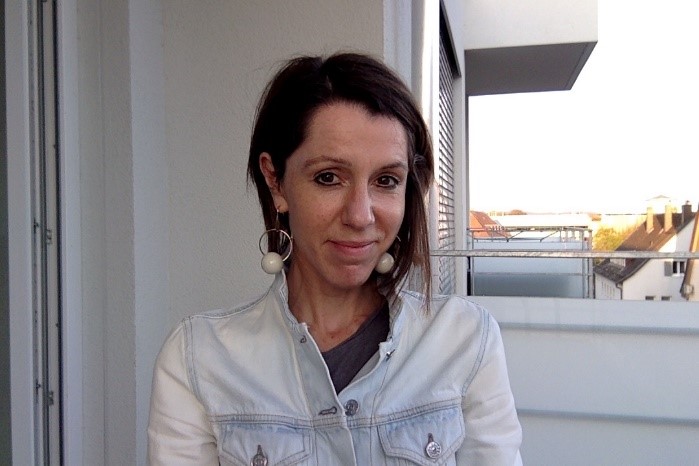
Bio: Amanda Machin is Professor of Political Sociology at the University of Agder in Kristiansand, Norway. She is interested in the dynamics, theories, discourses, imaginaries, protests, identifications, performances and bodies of ecological and radical democratic transformation. Her books include Bodies of Democracy: Modes of Embodied Politics (Transcript 2022) Nations and Democracy: New Theoretical Perspectives (Routledge 2015), Society and Climate: Transformations and Challenges (co-authored with Nico Stehr, World Scientific 2019) and Negotiating Climate Change: Radical Democracy and the Illusion of Consensus (Zed Books, 2013). With Marcel Wissenburg she is currently editing the collection Environmental Political Theory in the Anthropocene for Edward Elgar. She is currently working on projects on twin transition, critical mineral extraction and climate populism.
