
In this interview, Tatiana Sokolova discusses the research and findings of the recent article in Environmental Politics – On the climate justice front: Co-producing prefigurative politics in ‘Ecodefence! and others vs. Russia’ climate case in the European Court of Human Rights.
Congratulations on your recent article! What is the key message that you hope people take from this research?
I had two main aims. One was to show how civil society diversifies their strategies when the usual ways of fighting structural injustice do not work under authoritarian crackdown. The other was a bit more normative and, perhaps, a little personal: to shed some positive light on what is happening in Russian climate politics, to show that there are actors who keep challenging the status quo even under the most impossible conditions and do it skilfully and with full conviction.
You introduce the concept of “strategic absurdity” — the idea that activists repeat seemingly futile acts to keep a social vision alive. With the Trump administration dismantling US climate policy and anti-climate litigation rising, does this Russian case offer a playbook for climate movements operating under hostile governments more broadly?
No, I don’t think there are many playbooks available at the moment, given the volatility of politics today. The tendency in the US federal governance seems to have been overusing and lately abusing the judiciary system, ‘flooding’ it. It may reflect a more general trend globally, turning to courts across the board of different issues and by different actors that earlier would not have done so. Some suggest that in the long run it may hollow out the judiciary. In this light, strategic absurdity is not about the effectiveness in court or policy, but rather using all available methods to create solidarity and challenge oppressive systems.
Does your work suggest that “community lawyering,” as practised in the Russian case, offers a more equitable model for Indigenous-led climate litigation globally, or does legal mediation inherently dilute Indigenous epistemic authority?
I do not think that legal mediation inherently dilute Indigenous epistemic authority. Many Indigenous actors achieve success in courts at all levels on many different issues. One just needs to be mindful about how Indigenous knowledge enters legal processes. In that sense, community lawyering is a good practice, following the ‘nothing for us without us’ principle. I like the idea of an alignment between lawyers who seek to protect the environment and human rights and Indigenous actors who may not have many resources for legal advice. It is a kind of ‘activist litigation’ that has many examples.
Finally, what’s next? Are you publishing more on this topic?
I hope so! I am in the exciting and daunting phase of finishing my PhD and applying for new funding, including for a project on Russian climate obstruction in the current geopolitical context. But I am also deeply inspired by the Russian lawyers who led this case. They made me reflect on the diverse and unexpected sides of legal practice, including prefiguration. I must admit I used to think of legal studies as a ‘boring’ field – to my shame. I could not have been more wrong. Now I find it fascinating! I hope I will be able to explore the so-called radiating effects of legal practices in environmental politics in the future.
Bio
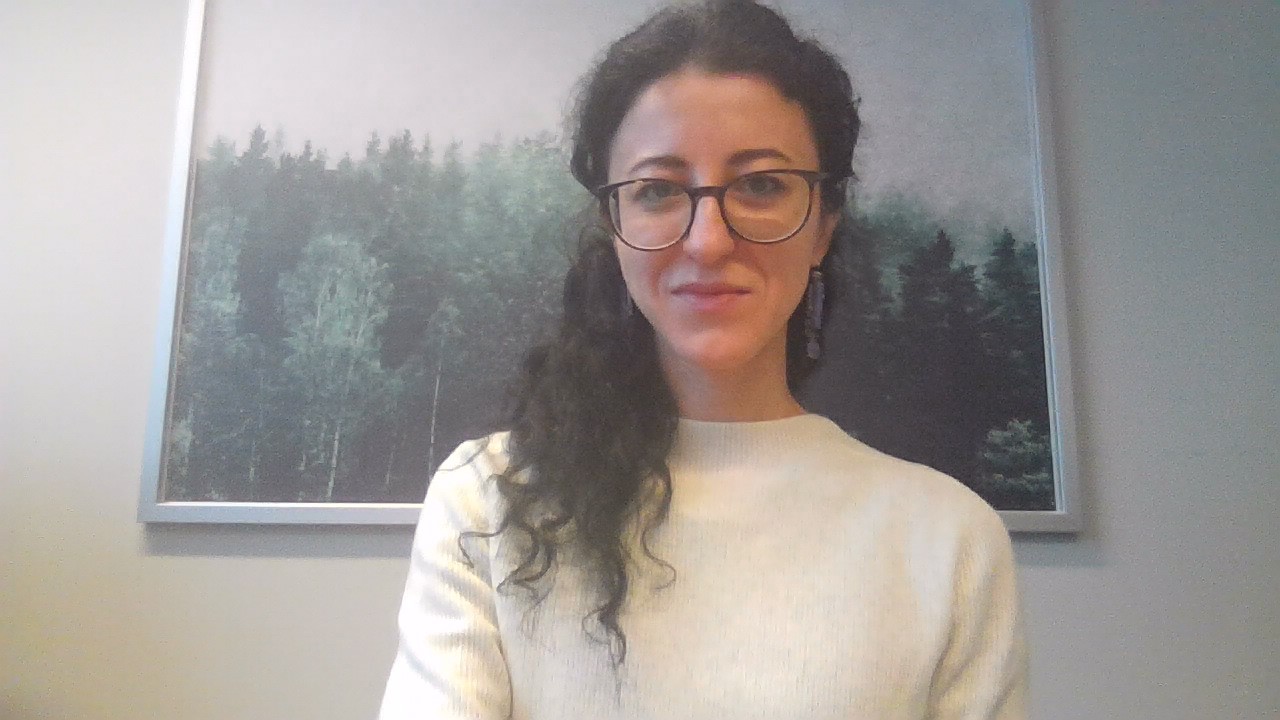
Tatiana Sokolova is a doctoral student in Environmental Studies at the Department of Environment, Development and Sustainability Studies at Södertörn University, Sweden. She studies the interface between knowledge and politics of sustainability transitions and transformations, focusing especially on how power manifests in relationships between different societal actors in co-production of sustainability knowledge, imagination, and action. Her research has involved critical analysis of sustainability and research policies, political ontologies and power dynamics of research programmes, knowledge-action configurations of deliberative democracy, and prefigurative legality of climate litigation. She is affiliated with Research Forum at the Centre for Environment and Development Studies (CEFO/CEMUS) at Uppsala University, Sweden, the GreenDeal-NET in Belgium, and Centre for Sustainability, Environment, and Arts in Education at Southern Cross University, Australia.
