
In this interview, Mihaela Mihai and Danielle Celermajer discuss the research and findings of their recent Special Issue on Eco-Emotions published in Environmental Politics.
Congratulations on your special issue! How did this set of articles come together?
Thank you. This is the result of an ongoing interest we (the co-editors Mihaela Mihai and Danielle Celermajer) have had in the topic of ecological emotions – emotions that have as their object the intertwined climate and biodiversity crises. Our particular focus on the relevance of ecological emotions for environmental politics forms part of a longstanding concern that both of us have had in our work to include affect and the body as intrinsic dimensions of sense-making, political sensibility and political action. This is of course consistent with a long history in feminist theorising.
In recent years, public intellectuals, scientists, activists, journalists, and members of communities who have borne the brunt of the environmental crisis (including historically exploited indigenous peoples, racialised and impoverished populations) have become increasingly vocal about experiences despair, fatalistic resignation, grief, rage, bitterness, guilt, shame, and horror – all triggered by the relentless degradation of ecosystems, heightened by acute climate disasters. At the same time, we are seeing an intensification, particularly amongst young people, of feelings of hopelessness, tied to a sense that political responses to the crisis are woefully inadequate. These reactions are in radical tension with the “hopism” of most public discourses, discourses that enable and perpetuate dangerous practices of disavowal and postponement. This tension has irked both of us, and a few years ago we secured a bit of funding to explore these emotions in conversation with scholars from social sciences and the humanities. Through our AHRC Research Network grant (AH/X009106/1), we organised a series of three workshops. The special issue is based on the contributions colleagues shared with us.
In curating this issue, how do you analytically distinguish between eco-emotions that expand democratic imaginaries (e.g. ecological grief, multispecies care) and those that fuel authoritarian, racist or eco-fascist projects, given that both arise from similar experiences of loss and crisis?
Thank you for this very important question that requires – I think – a conceptual clarification. And this is because many scholars and commentators discussing far-right populism and the rise of authoritarian politics too often blame them on certain emotions, with resentment and anger foregrounded as these irrational, uncontrollable forces that threaten the democratic game. Moreover, quite often, one notices the problematic tendency to portray democratic movements as being fuelled by positive and noble emotions, while framing far-right supporters as motivated by “ugly” feelings such as envy, resentment, or fear.
Both theoretically and empirically, we do not understand emotions to be inimical to reason and thought. We follow scholars of emotion who have amply shown that both cognitive and physiological drivers come into play in the experience of politically salient emotions. Contrary to accounts that “stupidify” emotions, or that assume simplistic connections between particular emotions and particular political orientations, we assume that a range of emotions can, just like reason, support either democratic and undemocratic goals. Therefore, emotions should not be blamed for the rise of far-right populism, nor should they be banished from politics – as many a rationalist has argued over the centuries. Emotions are key elements of human experience and essential to understanding how political commitment, mobilisation, contestation and change can happen.
Good scholarship should then distinguish between pro- and anti-democratic emotions through a careful investigation of their object, their directionality. What are emotions oriented towards? What are the cultural and political frameworks of intelligibility through which they are expressed, interpreted, channelled, collectivised? And what political goals are they directed towards? Depending on what conception of democracy we find most desirable (e.g., agonistic, participatory, national or trans-national, anthropocentric or multi-species), we can then assess various cases to decide whether a particular emotion advances or thwarts our vision of what democratic politics should look like. This is the type of work we see the authors in our volume doing.
What is the key intervention that the Special Issue makes?
We aim to demonstrate the political salience of ecological emotions at a time of escalating climate and biodiversity crises. The Special Issue seeks to make clear that, far from being merely pathological responses by over-sensitive individuals – as some have often portrayed them – eco-emotions are healthy, non-pathological reactions to political inertia on the environmental front. Scholarship on environmental politics should not make the mistake of sidelining ecological emotions or misrecognising them by pushing them beyond the scope of politics. Sometimes eco-emotions fuel political paralysis, especially if dismissed or discounted publicly. More often than not, they act as drivers and/or accompanying effects of environmental action: they sometimes spur the ecologically attuned into collective action, other times they accompany environmental activists, scientists, journalists as they engage in sustained efforts over time. What matters is this: how do we channel them politically? What forms of cultural mediation do we have at our disposal to harness their power for robust environmental action? And who represents them and on what terms? Who vindicates and captures their energy politically? Most fundamentally, how can these emotions be publicly recognised and productively integrated into a sober form of green politics, which does not shy away from the complexity, scale and gravity of the crises, yet nonetheless accommodates grounded forms of hope?
You situate eco-emotions within a broader polycrisis of ecology, care, and mental health; how should researchers methodologically trace the entanglement between structural determinants (capitalism, colonialism, precarity) and individual affective experience, beyond psycho-social accounts?
Our special issue highlights eco-emotions’ embeddedness within a polycrisis that is simultaneously ecological, social, economic, and political. Careful to avoid reductive understandings of the emergence of eco-emotions as a psychological phenomenon, our authors remain attentive to the complex structural determinants of individuals’ affective lives and emotional registers. Constructive proposals regarding eco-emotions’ transformative potential depend on a meticulous labour of diagnosing their heterogenous sources and variable modes of political expression – and this is something all our contributors have taken to heart.
Methodologically, attention to this complexity requires sociologically grounded, historically informed analyses that seek to parse out the key aspects of the context in which such emotions emerge, including their evolution over time. There is no single methodological recipe we can prescribe – in fact, a variety of traditions and methodological orientations in the social sciences are well suited to the task of offering a discriminate, rich account of eco-emotions and their multiple structural determination, but also of the opportunities they create for effective political action. What we’d like to emphasise, however, is that – as is the case with all complex social phenomena – staying safely within the confines of a single field or discipline might not yield the most illuminating findings. Precisely because of their embeddedness in the multidimensional polycrisis, robust scholarship will require an interdisciplinary conversation.
Finally, what’s next? Are you publishing more on this topic?
I (Mihaela) have published a couple of papers on ecological guilt and ecological grief in journals such as Polity, Angelaki and Memory Studies. Danielle and I have just written a paper that critically modifies social theorist Hartmut Rosa’s concept of resonance to conceptualise eco-emotions as non-transient, painful experiences that evidence a non-alienated relationship with the environment. We propose that, to capture these emotions’ political potential, they need validation and support in community, and we turn to theories of ritual to identify the practices that can vindicate, collectivise and channel them politically. This paper is now available online in the European Journal of Social Theory. I have also just finished a book (co-authored with Camil Ungureanu) that touches on far-right ecology and their affective strategies at Europe’s Eastern periphery – this will be published this year in Routledge’s series Studies in Extremism and Democracy.
My (Danielle’s) work is increasingly focused on the institutionalisation of multispecies justice and in particular, the inclusion of the more than human in political decision making. Insofar as it is intrinsic to interspecies communication, emotion is central to this work. In this regard, I have several forthcoming papers focusing on questions of representation, voice, and nature connectedness. I also have a forthcoming book with my colleagues Rosemary Lyster and Philipa McCormack on Multispecies Climate Justice, Disasters and Responsibility with Edward Elgar.
Bios

Mihaela Mihai is a political theorist at the University of Edinburgh. Mihaela’s research interests cut across political theory, political science and cultural studies; more precisely, interested in political emotions, political judgment, the politics of memory, art and politics, gender, and theories of oppression. Between 2015-2020, Mihaela ran a European Research Council Starting Grant: Illuminating the ‘Grey Zone’: Addressing Complex Complicity in Human Rights Violations. Mihaela is currently PI of an AHRC Interdisciplinary Network for the Study of Environmental Emotions.
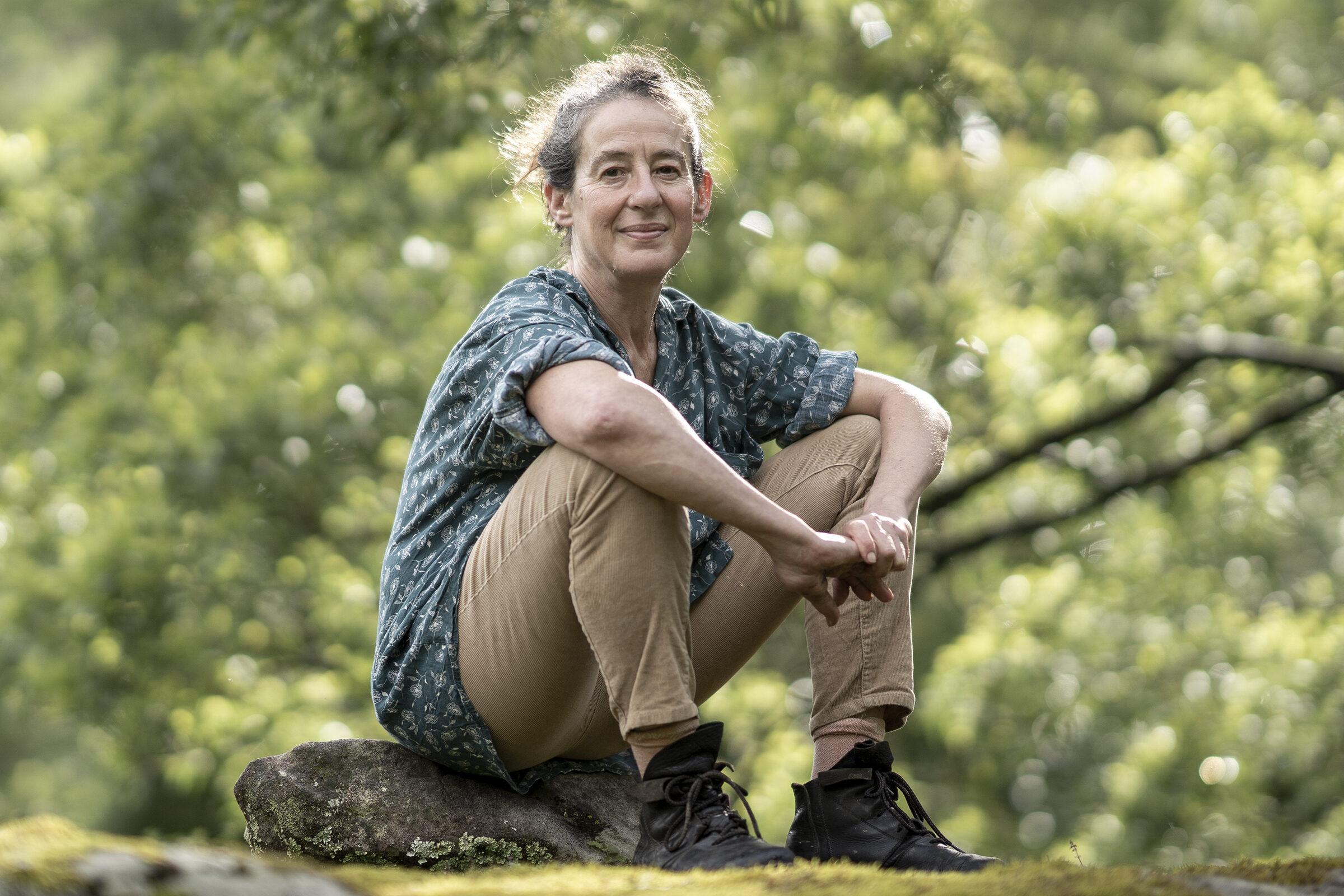
Danielle Celermajer is a political theorist at the University of Sydney. Danielle’s research focus today is on Multispecies Justice, or how the concepts, practices and institutionalisation of justice needs to be transformed to take into account ecological realities and the ethical standing of all earth beings. A longtime human rights activist, before joining the academy Danielle was head of Indigenous policy at the Australian Human Rights Commission and worked in grass roots democratization and human rights movements in Central America.
