
Editor with Environmental Politics since 2020, Sherilyn MacGregor is now ending her tenure. In this interview she reflects on her time with EP, some highlights of her experience, and some advice for people who might wish to be a journal editor in future.
First of all Sherilyn, thank you for another tenure as an editor of Environmental Politics! This was your second term I think..?
My involvement with Environmental Politics journal started not long after starting my first lectureship in environmental politics at Keele University, which was at the time an important place to be for our field. (As an aside, it is tragic what has happened at Keele over the past decade, from culling innovative environmental programmes to the compulsory redundancies of fantastic, long serving academics in politics, international relations and philosophy). I became a reviews editor for EP in 2007, replacing Graham Smith and teaming up with Derek Bell to edit the book review section. It was an excellent way to learn how journals are run. And doing the book reviews helped me develop a huge network. I can still remember the joys of packing up and mailing books through the post to people who’d I’d persuaded to review for me. I had that role for a while and then became an editor in 2012.
My first stint as editor ended in 2017 after I moved to the University of Manchester. I came back as an editor in 2020 because I felt there was a bit of unfinished business in terms of wanting to help bring different and hitherto underrepresented perspectives into the journal, particularly ecofeminist, decolonial and multispecies perspectives. The journal had a new Editor in Chief (John Meyer) who I really respect and wanted to work with. By this point the journal had started using Editorial Manager. For all its annoying features, it was a welcome change: we never used while I an editor the first time around and the ‘low-tech’ approach was challenging.
What changes have you seen at Environmental Politics since 2020, and what are you most proud of? Do you have a highlight from this period?
If I go back even further to when I started nearly 20 years ago, I can see some big, interconnected changes. One is that there is now a much more diverse team of editors in terms of research background and personal positionality. And this means that we have been expanding the aims and scope of what environmental politics about – from what was a fairly narrow understanding (geographically and substantively) two or three decades ago. EP played a central role in defining the field and showing it to be a rigorous and serious as a body of political research in the early days (when it started in 1990s), and it had to face down assumptions that it was too normative and radical for serious social science. And in the 2020s we have succeeded in expanding its relevance, significance and reach, while also being a top ranked journal – just look at the impact factor we’ve had in recent years. I’m proud that we have done so while remaining true to our commitments.
A highlight for me was collaboratively writing the introduction to the 30-year anniversary issue Trajectories of Environmental Politics, which makes these commitments clear. And I’m proud that I managed to write an article for that same special issue about the way ecofeminism has featured (or not) throughout that 30-year history. I am hopeful that it has been taken as an invitation for more scholars working with that perspective to submit their research to the journal.
For people who might be interested in being an editor in the future, what would you advise about what this role requires?
Well it is a lot of work and responsibility, so my advice is to think carefully about how it fits into one’s overall career plans. On the one hand, it is fantastic for networking and for being at the forefront of new ideas and methods in the field of environmental politics. And it is rewarding to have a hand in shaping these new ideas and getting important work out into the world. On the other hand, it can come at the expense of writing one’s own important work! I spent many evenings and weekends helping other scholars publish articles and then never seemed to have enough time for my research and writing. So I would lean slightly towards saying it is more suited to those of us in a later career stage. As I said, I had to step away when, in mid-career, I needed to put my own research first. For those in early career who are able to juggle and manage the pressures of the REF or tenure alongside being an editor, it can be extremely beneficial career-wise. But balancing competing pressures, time management and maintaining boundaries are essential skills, alongside the obvious skills of being good with language and knowing how to give constructive feedback.
You are now a Director of the JUST Centre based at the University of Manchester, tell me about that! And what else do you have planned?
The Centre for Joined-Up Sustainability Transformations (JUST) is funded by the ESRC for nearly £10million to research how the transition to a decarbonised economy can be a force for fundamental societal transformation: for tackling multiple crises (e.g., of climate and the cost of living; of care and democracy) in a joined up, people-centred and socially-just way. We’re a team of environmental social scientists working in five universities across the north of England (Manchester, Leeds, Newcastle, Liverpool and Lancaster) who have long track records in environmental justice and just sustainability research. Additionally, I’m thrilled to have the opportunity to work again with colleagues I’ve known since the early days of joining the EP community when I first moved to the UK, including Derek Bell and Julian Agyeman, and of course Mat Paterson, who is JUST’s deputy director, and has been a long-standing EP contributor and member of the EP editorial advisory board.
The JUST vision is to drive a paradigm shift away from the focus on behavioural and technological change, which has been dominant for far too long in my opinion, towards ‘just transition’ research and action that contributes to building collective capacity for structural and political change, especially in places and among groups of people that have been marginalised and alienated from the mainstream ‘net zero’ policy frame. We’re putting justice at the centre of the debate and aiming to co-produce the tools and evidence needed for accelerating a transition that benefits communities across the UK – and hopefully telling stories that can inspire hope in the face of the anti-net zero backlash that is gaining ground in many parts of this country and others around the world.
It’s the honour of my career to be leading this Centre and so I’ll be devoting all my energies to it. I made the difficult decision to step down as editor in 2024 after finding out that our grant application was successful, but I seem to have stayed on for another year to finish the editing work in my Editorial Manager in-tray. As Director and PI, all my time will be taken up for the next five years, so it won’t be possible to juggle my editing work. I also have a book to write, from another research project, called Unsettling Sustainability. And I’m looking forward to some time to relax at weekends for the first time in a long while.
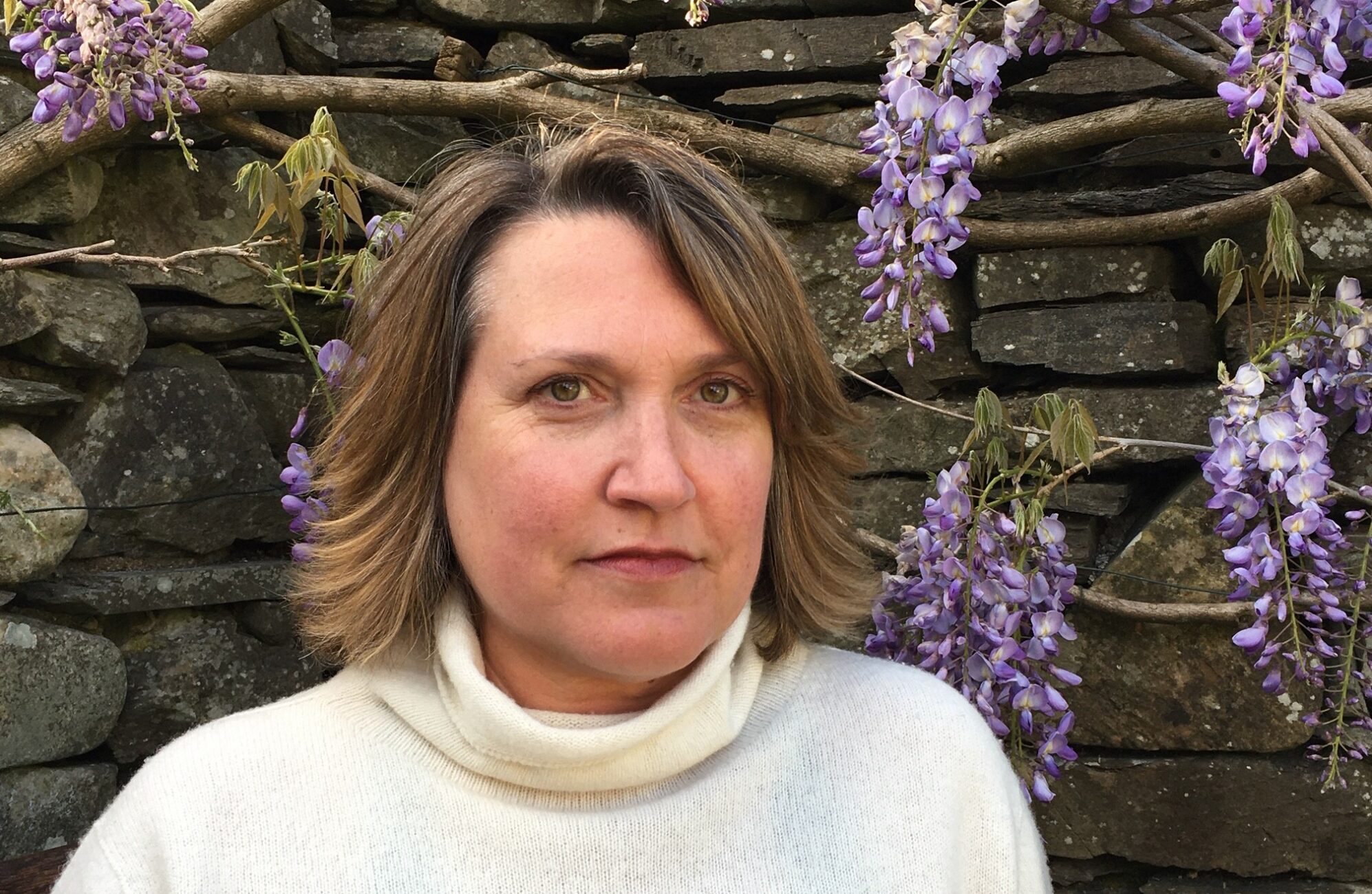
Bio: Sherilyn MacGregor is Professor of Environmental Politics at the University of Manchester and Director of the ESRC-funded Centre for Joined-Up Sustainability Transformations (JUST). More information at: https://research.manchester.ac.uk/en/persons/sherilyn.macgregor/
