
In this interview, Vivian Price, Todd E. Vachon, Dimitris Stevis, & J. Mijin Cha discuss the research and findings of their recent article in Environmental Politics: ‘Negotiating just transitions: power and interest dynamics in insurgent sustainability coalitions’
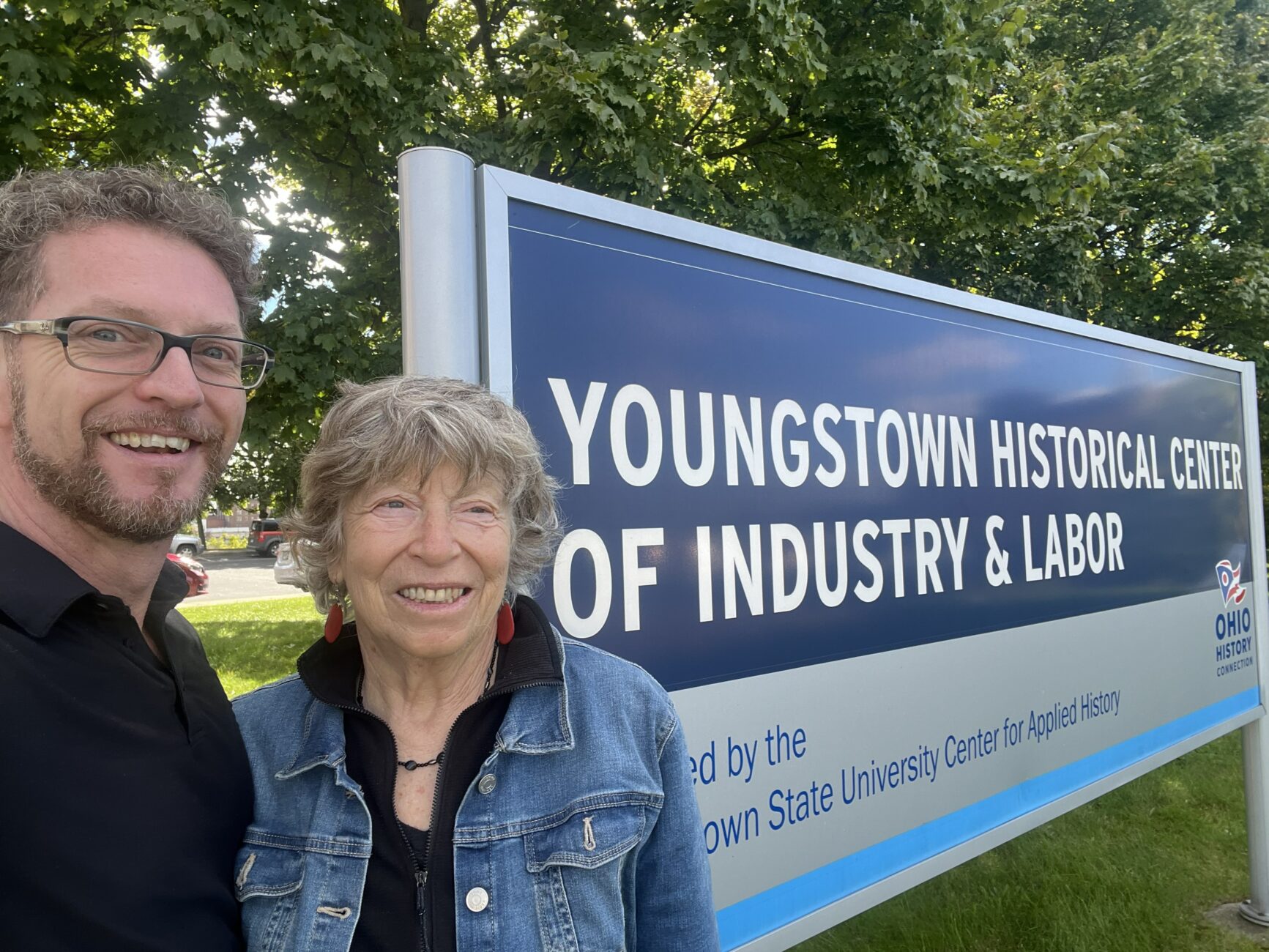
Congratulations on your recent article! What is the key message that you hope people take from this research?
Just transition is now a term that is used quite casually by mainstream social and political leaders who often employ the rhetoric of leaving no one behind, but do not include grassroots stakeholders in consultation and implementation in a meaningful way.
Making a green transition just is a demand that was developed by labour and environmental justice groups who were determined that workers and communities should not be abandoned in the process of change. History is littered with examples of displacement, unemployment, increased poverty and despair when economic change takes place.
Our main message is that which groups, representing whose interests, are involved in negotiating just transition plans shape the kinds of programs that emerge. Quite often scholars who write about “insurgent coalitions” treat these as homogeneous, not analyzing who participates and who has power within those coalitions. This risk is even more pronounced when these coalitions involve what may be considered more subaltern groups.
We argue that within ‘subaltern’ insurgent coalitions, labour and community groups and others must still negotiate interests and power among themselves. These coalition members have conflicting interests, as well as differential sources of power and influence which they may leverage for their own advancement. How power is wielded or tempered in coalitions is evident in the plans they propose.
You mentioned ‘insurgent coalitions’. Who are these groups, and what is their role?
Insurgent coalitions, in sustainability politics, are those who challenge the incumbent and reigning fossil fuel interests. In much of literature the discussion of insurgent coalitions includes those who promote ‘green’ politics, such as green capital, mainstream environmentalists and elements of states. They may also involve unions, environmental and community justice organizations. We think that who participates and the power relations amongst them produces differential sustainability paths. This is the case, we argue, even amongst insurgent coalitions that consist of the relatively more marginalized social forces, such as labour environmentalists, environmental justice, community justice and faith-based organizations and networks.
This research came from a ‘community-engaged project’. What was this experience like? Were there any particular challenges or benefits from working this way?
Working as a community engaged project provided many benefits. The authors were the research team affiliated with the Just Transition Listening Project of the Labor Network for Sustainability (LNS). The project was to conduct oral histories with people affected by transitions, including unionized and non-unionized workers, community justice, environmental justice, and Indigenous groups in the United States. The goal was to help LNS develop recommendations for just transition policy based on prior experiences and visions for the future. An organizing committee, assisted by project advisors and staff from LNS, was representative of the groups we proposed to interview, making it possible for us to conduct our research with some measure of racial, geographical, and broad demographic distribution. This group worked through the methods we would use to elicit stories from the people we spoke with and helped us recruit people who we trained to carry out the oral histories. This process gave us great access to leaders, activists and rank and file individuals who had important stories to tell. Our report was published as Workers and Communities in Transition, Report of the Just Transition Listening Project and its findings were presented in a Congressional briefing as well as to many labour unions and in other venues.
What was the biggest difference between your case studies of Washington State and Colorado? What did that tell you?
The comparison we make is between two insurgent coalitions that came together to create just transition plans. They started out with similar membership, representing labour unions as well as environmental justice groups from communities of color and low-income groups. But the coalitions ended up with plans that were quite different. Our study analyzes why that happened.
In Washington state, these groups, together with “big green” environmental organizations, united for a common cause but with a recognition of their power differences. The environmental justice groups demanded that decision-making structures put coalition members on more of an equal footing. They were joined, after a series of consultations, by many tribal groups, and the coalition negotiations resulted in what we call a relatively transformative transition plan. That plan institutionalized intentional investments in transitional support for displaced workers, clean energy and clean water for environmental justice communities, decision-making power of labour and environmental justice communities in disbursing grant income from a “polluter pays” carbon fee. One of the legacies of Washington I 1631 was that it was among the first proposals in the US to incorporate free, prior, and informed consent for First Nations on projects that impact their lands and people, and this became Washington law in 2019.
In Colorado the insurgent coalition became narrower over time with environmental justice, community justice and faith-based organizations playing a lesser role. Labour unions in the coal power sector ended up becoming dominant with the tacit support of the BlueGreen Alliance, an organization of manufacturing unions and mainstream environmentalists. Nonetheless, the result was a groundbreaking just transition policy focusing on coal electricity, however with less attention paid to the demands of environmental and community justice organizations.
The contrast demonstrates the importance of exploring how participation and power dynamics within insurgent coalitions shape transition plans. While Washington State Initiative 1631 was defeated at the polls and the Colorado Just Transition policy passed and became law, both provide important models.
Finally, what’s next? Are you publishing more on this topic?
Our research group has published several frequently cited peer-reviewed articles based on the LNS Just Transition Listening Project. We have found that our methodology of conducting oral histories with stakeholders is a useful one. Presently we are working as a team on a just transition listening project articulated around the lithium lifecycle in the USA, funded by the Sloan Foundation. As with the original listening project our attention will focus on the involvement of and impacts on workers and communities of the domestic development of this critical mineral extraction, battery manufacturing, and the establishment of battery energy storage systems. Each member of our research team is also actively engaged in other research, much of which has bearing on the issues of labour environmentalism and just transitions.
Note: For more information on Washington 1631, see this explanation
For more on the Office of Just Transition, see House Bill 19-1314 Colorado (2019)
Bios:

Vivian Price, PhD is professor of interdisciplinary studies at California State University, Dominguez Hills, and a former union electrician. She is a researcher and filmmaker for US and international projects on labor and climate justice. She was a Fulbright scholar at the University of Liverpool, a Fulbright specialist in Norway, working with the WAGE team at the University of Oslo on the perspective of oil workers on climate change, where she directed Talking Union, Talking Climate. She’s a member of the Climate Industry Research Team for the Canadian Building Trades Union. Presently, she is directing short films as part of “Transition: action, concepts, debates and strategies – an international comparison,” a study based in the Leeds School of Business (Hans-Böckler Foundation) and is a visiting scholar at the University of Eastern Finland with the Legitimacy2035 project with a focus on unions, environmentalists and the forest sector.
Todd E. Vachon, PhD is assistant professor of Labor Studies and Employment Relations at Rutgers University and serves as the Director of the Labor Education Action Research Network (LEARN)—the university’s labor education program. Todd has written extensively about labor and climate justice, including his recent books Clean Air and Good Jobs: U.S. Labor and the Struggle for Climate Justice and Revaluing Work(ers): Toward a Just and Sustainable Future. . Beyond climate scholarship,Todd serves as President of the New Brunswick chapter of the faculty union, Rutgers AAUP-AFT, where he is also co-chair of the union’s climate justice committee. Todd also serves as Vice President for Higher Education of AFT New Jersey and is a founding steering committee member of the recently formed Environmental and Climate Justice Caucus within the American Federation of Teachers nationally. He is President of the Middlesex-Somerset Central Labor Council.
Dimitris Stevis PhD is Professor of International Politics in the Department of Political Science at Colorado State University, USA. He focuses on the international political economy of environment and labour with particular attention to environmental labour studies and just transitions. He co-convenes the Planetary Justice Taskforce of the Earth System Governance Project and the Just Transition and Care Network. He co-convened the Just Transition Research Collaborative (2018-2022). He is a founder and codirects the Center for Environmental Justice at Colorado State University and a cofounder and executive committee member of the Mountain and Plains Thriving Communities Collaborative, an environmental justice technical center funded by the Environmental Protection Agency (USA). He is currently working on The Critical Minerals and Metals Just Transition Listening Project (Sloan Foundation), and the Just Transition Academy Exchange initiative, funded by the Just Transition Fund.
J. Mijin Cha PhD is Assistant Professor of Environmental Studies at University of California, Santa Cruz. She is also a fellow at Cornell University’s Climate Jobs Institute and a fellow at the Climate and Community Project. Dr. Cha’s work looks at the intersection of climate, labor, and inequality. Her recent research is on “just transition,” how to transition workers and communities equitably into a low-carbon future. Her recent book, “A Just Transition for All: Workers and Communities for a Carbon Free Future,” (MIT Press) was released in Dec. 2024. Her current grant portfolio includes the Critical Minerals Just Transition Listening Project (Sloan Foundation) and two projects with the California Air Resources Board. Dr. Cha is on the board of Greenpeace Fund, and a member of the California Bar.
